
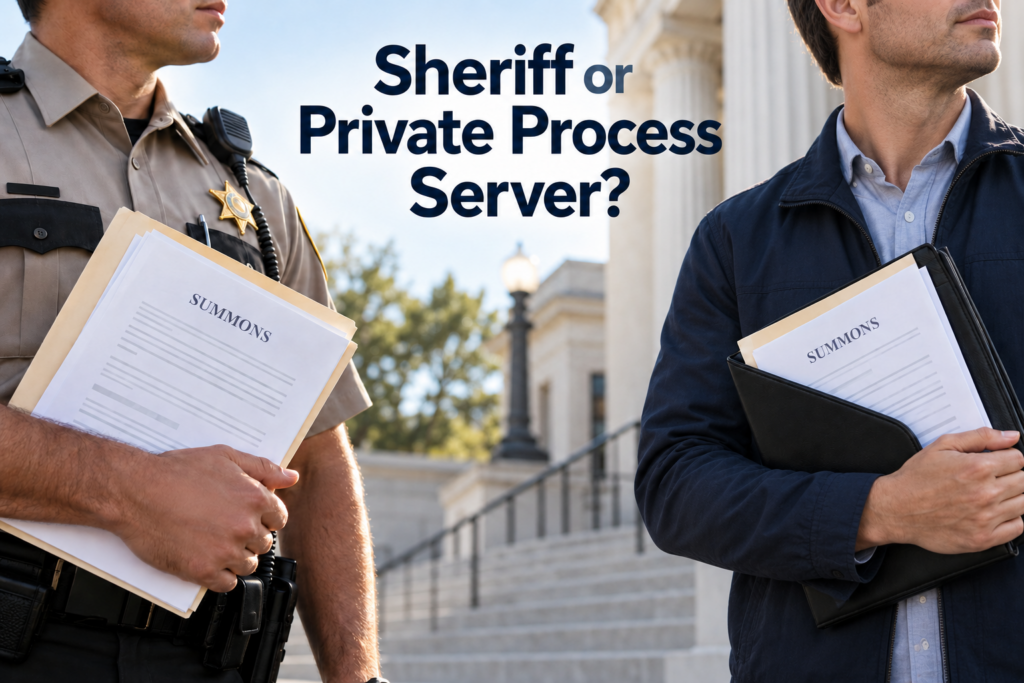
After filing a lawsuit, you need to make sure the defendant is properly served according to Virginia Code Section 8.01. In Virginia, sheriff service for ordinary civil process generally costs $12 per person served. A private process server costs more, but may offer greater flexibility when timing or locating the defendant matters.
What are you serving?
The document you are serving affects both how it must be served and who may serve it. Some proceedings require personal service meaning it must be handed to the defendant personally. Others allow substituted service or posting. Check the requirements for the particular document before choosing a method.
An unlawful detainer summons, for example, may be served under Virginia’s general civil service rules. If the defendant cannot be found at their usual residence, the summons may be left with a qualifying family member who lives there and is at least 16 years old. If that is not possible, posting at the main entrance may be permitted, subject to additional mailing requirements. Simply posting the summons on the door does not necessarily complete every required step. Ensure to review the Virginia Code for how your particular document can be served.
When does sheriff service make sense?
The sheriff is often a reliable, economical choice when you have a good address and enough time before the hearing. At $12 per defendant for ordinary civil process, the cost is difficult to beat.
The tradeoff is flexibility. Sheriff’s offices handle many legal documents. Your papers may wait a week or longer for an attempt, and you generally cannot direct a deputy to visit a particular address at a particular time. A delay of a week or longer can matter when you have a pending court date.
When is a private process server worth considering?
A private process server can work from specific information you provide, such as where the defendant works, when they are usually home, or another location where they may be found. The sheriff’s office generally has less flexibility to prioritize your document or follow instructions about a particular time and place. In many localities, routine service attempts occur only during business hours, though practices vary. If the defendant is easier to find in the early morning or late evening, a private server may be worth the added cost.
A private process server can provide direct, timely updates about service attempts and make it easier to provide additional instructions if the initial address or timing does not work. By contrast, giving a sheriff’s deputy a new address or updated information may be more difficult or time-consuming. With a private server, you can typically communicate new information directly and promptly arrange another service attempt based on what you learn.
Will proof of service be available for your hearing?
The return of service is a document that states when and how the papers were served. Virginia law generally requires the person serving process to make a return to the clerk’s office within 72 hours after service, with an adjustment when the deadline falls on a weekend or legal holiday. A sheriff makes an official return; a private server provides an affidavit with the required service information.
In my experience, there have been times when a sheriff’s deputy may have already filed the return of service, but it took a week or longer for the filing to become available to me. The time it takes for a return to become accessible can vary depending on the procedures of the particular court. If proof of service is not yet available at the hearing, the court may continue the case while the issue is resolved.
A private process server will often send you the completed service affidavit promptly. You should still confirm who will file it with the court and check that the return is in the court file before the hearing. Hiring a private server does not automatically ensure the court has received the affidavit.
Which should you choose?
Whichever option you choose, confirm the service requirements for your document before handing it off for service, track the service attempts, and make sure proof of service is properly completed and available to the court before your hearing.
If you have a reliable address and ample time, sheriff service may be the sensible choice. Keep in mind, however, that some sheriff’s offices are busier than others, which can affect how quickly service attempts are made and how quickly the return of service becomes available.
Keep in mind that not all private process servers are the same. If you choose private service, make sure you are working with a reputable process-serving company with experience serving your particular type of document and operating in the geographic area where service is needed.
If you have questions about service of process or need assistance, reach out to KQ Law, PLLC for a no-cost consultation.
Disclaimer: Every case is different. The information provided is for general informational purposes and is not legal advice. You should speak with a qualified attorney about the specific facts of your situation to determine your rights and legal options.